


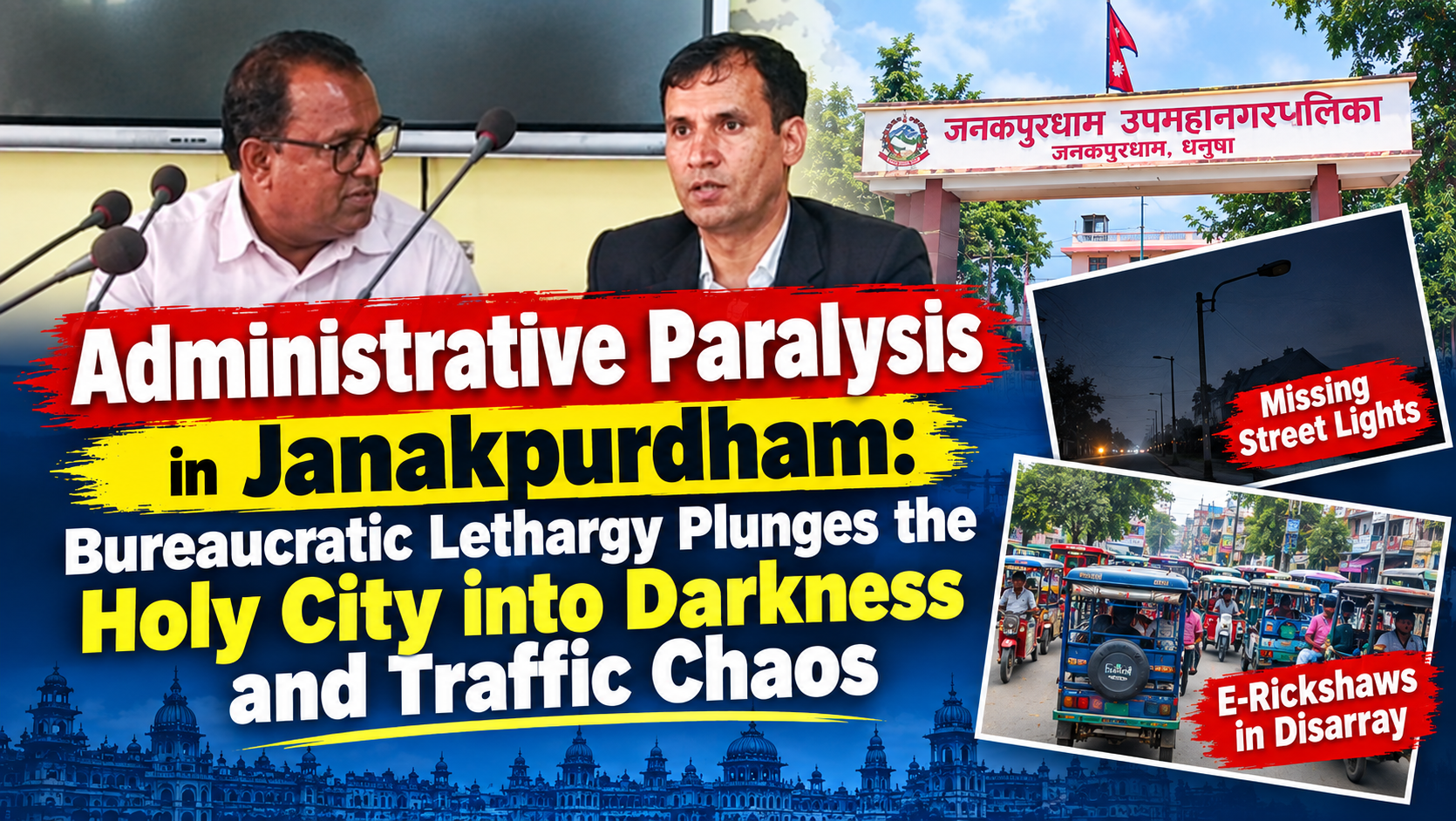
By Ashish Kumar Mandal,janakpurdham, Nepal :The mere mention of Janakpurdham, the sacred birthplace of Goddess Sita and the proud capital of Madhesh Province, evokes a profound sense of spiritual tranquility. Yet, a closer look at the current state of this historic city replaces that reverence with deep dismay. Despite drawing thousands of pilgrims and tourists daily, the city’s foundational infrastructure is crumbling under the weight of severe administrative negligence, subjecting the public to immense daily hardships and tarnishing its glorious identity.
As dusk falls, the bustling streets of this historic city are swallowed by an unsettling darkness. The sub-metropolitan city, seemingly eager to collect civic taxes, has miserably failed to provide the basic necessity of public illumination. Major thoroughfares and commercial hubs, including Ramanand Chowk, Bhanu Chowk, Kadam Chowk, Hospital Road, and the immediate vicinity of the sacred Janaki Temple, have been left in pitch-black conditions due to defunct streetlights. This systemic blackout not only risks the lives of pedestrians and motorists but has also instilled a palpable fear of theft and anti-social activities among the residents.
Compounding the misery of the unlit streets is the absolute anarchy of urban mobility, heavily driven by an unchecked and unregulated fleet of e-rickshaws. The local government has completely failed to enforce proper registration, designate route permits, or cap the sheer volume of these vehicles, turning the city into a chaotic labyrinth. Reports indicate that over seventy percent of these e-rickshaw operators roam the streets without a valid driver’s license. Their reckless driving, abrupt mid-road turns, and haphazard parking not only cause frequent accidents but also create gridlocks so severe that even ambulances are frequently trapped in life-and-death delays around critical medical zones.
In any functioning democratic institution, the elected leadership envisions policies while the formal bureaucratic hierarchy is tasked with executing those visions. Mayor Manoj Kumar Sah has reportedly taken clear initiatives and issued directives to repair the defunct streetlights and bring the rogue e-rickshaws under a strict regulatory framework. However, the execution of these policies has hit a massive brick wall within the city’s own administrative corridors, highlighting a severe breakdown in municipal governance.
Public frustration is increasingly pointing toward the administrative wing, specifically holding Chief Administrative Officer Gyanhari Ghimire accountable for this operational paralysis. According to a ward chairperson speaking on the condition of anonymity, despite the Mayor’s proactive decisions, the Chief Administrative Officer’s glaring non-cooperation and sluggish work ethic have stalled all meaningful progress. Vital civic interventions remain trapped in municipal files, effectively sabotaged by a lethargic bureaucracy that shows zero urgency for public welfare.
The stark contrast between the elected representatives’ intent and the administrative machinery’s inaction is holding the sacred city hostage. Unless the bureaucratic leadership immediately corrects its course, restores light to the streets, and enforces stringent traffic regulations, Janakpurdham is doomed to sink deeper into a quagmire of urban decay and administrative failure.











प्रतिक्रिया